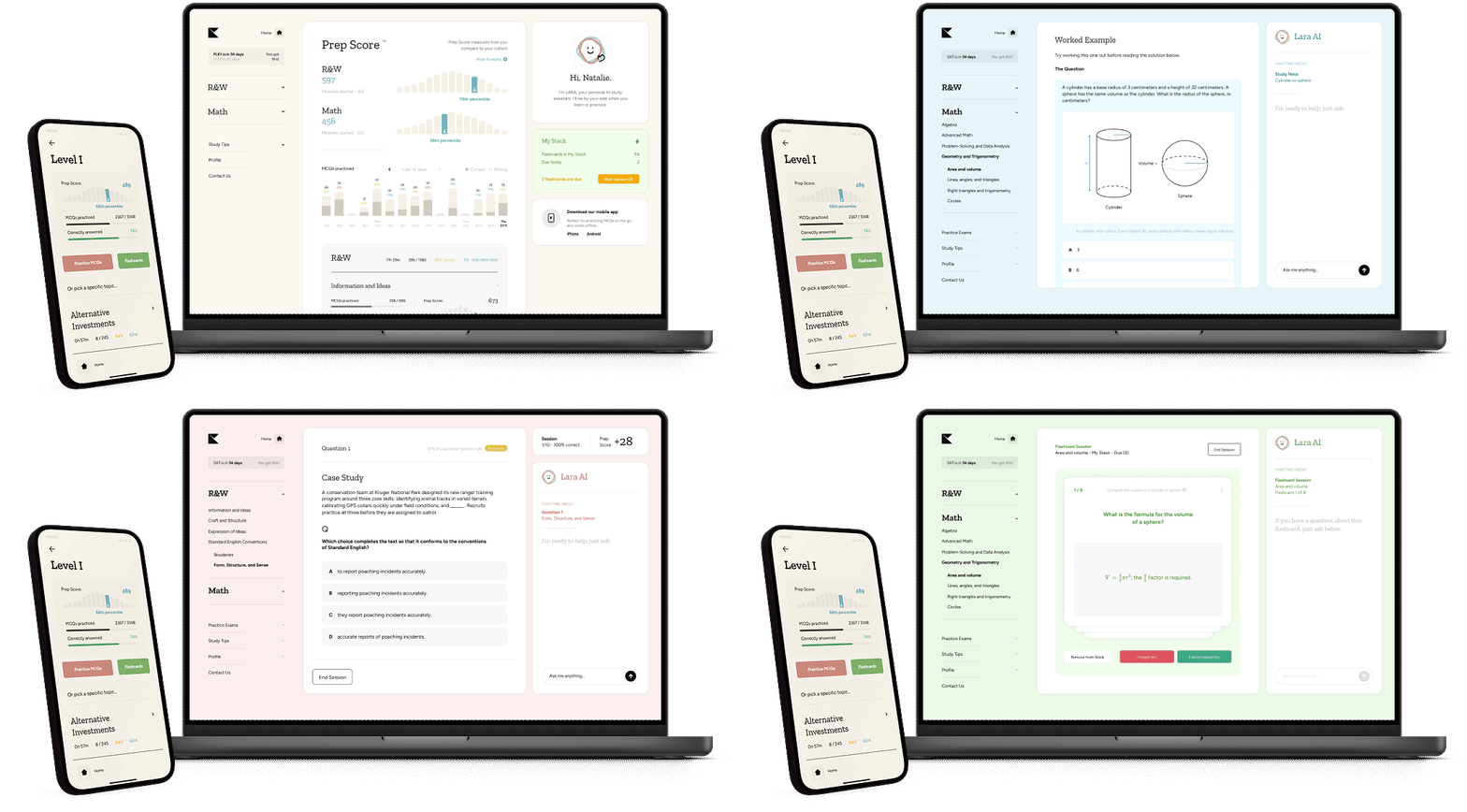
The Science of Studying for the SAT
Why some hours of revision stick, and others don’t.
Why do I forget stuff I studied just a few weeks ago?
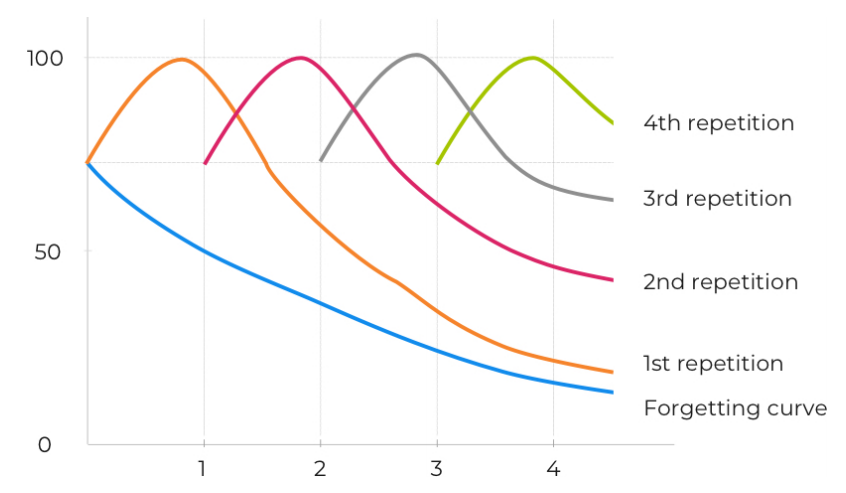
Blame the forgetting curve. Back in the 19th century, the psychologist Hermann Ebbinghaus found that people forget up to 90% of new material within a month of a single study session, and the steepest drop happens in the first couple of days. That’s bad news if you learn something once in September and don’t look at it again until your test date in the spring: without a deliberate review, most of it quietly leaks out of memory long before test day.
What actually happens when I “learn” something?
Think of it in three stages: encoding (getting the information in), storage (keeping it there), and retrieval (pulling it back out when you need it, like under exam pressure). Reading a grammar rule once is encoding. Whether it survives to test day depends on storage. And whether you can actually apply it to a tricky Standard English Conventions question in real time is retrieval, which only gets reliable through repeated practice, not repeated reading.
Is memorizing vocabulary the same kind of “remembering” as getting fast at algebra?
Not quite; they’re two different memory systems. Declarative memory is conscious recall of facts, like a formula from the Reference Sheet or what a word means in context. Procedural memory is an unconscious skill, like fluently plugging numbers into Desmos or instantly recognizing which algebra technique a question wants. Flashcards are great for building declarative memory, but procedural memory only comes from repeated, timed practice with real questions.
So how do I actually beat the forgetting curve?
With spaced repetition: reviewing material at gradually lengthening intervals, right as it’s starting to fade, rather than cramming it all in one sitting. Pair that with active recall, testing yourself instead of re-reading your notes. Don’t just look back over a Craft and Structure rule; close the page and try to explain it, or answer a fresh question on it. Tools like Kinnu automate this by resurfacing the concepts you’re shakiest on more often, and spacing out the ones you already know.
Why does SAT prep feel so overwhelming when I first start?
That’s cognitive load: your working memory can only hold a handful of new things at once, often around four. Cramming a dense new topic, like function transformations or a new grammar rule, on top of everything else you’re juggling can genuinely overload your brain. To manage it, pre-train the basics first (brush up on fractions before tackling ratio word problems), use multiple channels together (watch a worked example while sketching the graph yourself), and keep the rule and the example side by side rather than flipping between tabs or pages.
What’s “chunking,” and how does it help with something like grammar rules?
Chunking means grouping related pieces of information into one memorable unit, instead of memorizing them as a pile of disconnected facts. Rather than learning twelve separate comma rules, group them by function: rules for joining two complete sentences, rules for extra (non-essential) information, rules for lists. In Math, instead of treating every algebra manipulation as its own thing, see them as variations on “isolate the variable.” One cue then unlocks the whole cluster.
Does drilling with Desmos count as “real” studying, or is it a waste of time next to content review?
It absolutely counts, because navigating Desmos quickly under time pressure is its own procedural skill, separate from knowing the math itself. You want graphing, solving systems, and finding intersections in Desmos to become automatic long before test day, so you’re not fumbling with the tool while the clock runs on a question you otherwise know how to solve.
Start your 7-day free trial now
No credit card required
Get instant access
Start learning now
- Full access to all Questions
- Full access to all Study Notes
- Full access to all Flashcards
- Full access to Practice Exams
- Lara AI tutor
- Prep Score & performance analysis
- Desktop & Mobile app