Weekly update · Issue 6 ·
My memory of IHT is a lot like taper relief: it fades a little more every year…
Come on. That’s a good one.
Videos are live. On platform. For you. Nice.
The team have been working incredibly hard to get these out, and out they are. We’re starting with “Putting the Law into Practice” videos at the end of topics, but this is just the beginning. Over the coming weeks, we’ll be adding more videos throughout our notes, focusing on the trickiest topics where seeing it explained makes all the difference.
For all the visual learners out there, we know how valuable video can be, and we’re really excited to finally get these into your hands.
My personal favourite is our video on offer and acceptance, which gets into all the tricky details around advertisements, auction sales and acceptance matching the offer… you know the drill. I’ve added a screenshot here so you can get a sense of it.
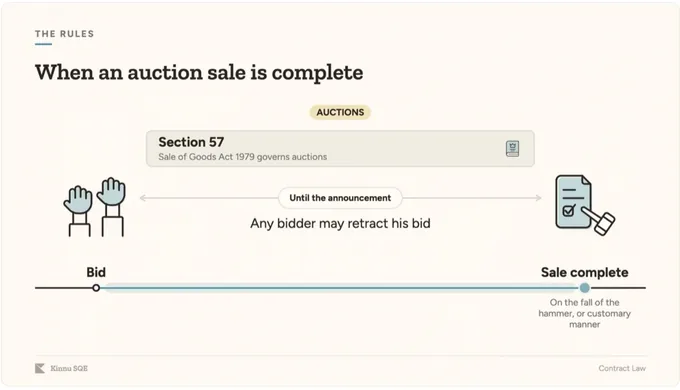
Do check it out in the Offer and Acceptance section of our study notes, right at the bottom of the note.
As always, if you have any feedback, hit reply. We’d love to hear what you think.
We wanted to introduce Zac.
Zac is one of our amazing SQE1 passers. He paid £25k to use a traditional SQE provider. Then he found Kinnu, and passed SQE1 in the top quintile 👀.
Zac sat down with our CEO Chris to talk about the financial pressures of sitting the SQE, his experience of the exam, and how using Kinnu helped him pass.
Check out the interview
A private company has finished its accounting period with profits for corporation tax purposes of £320,000. Corporation tax of £80,000 has been calculated on those profits. The company has two shareholders: its managing director, an individual who holds 60% of the shares and is also paid a salary, and a corporate investor that holds the other 40%.
Before the year end, the directors resolved to pay a dividend of £90,000 in proportion to the shareholdings, to be paid in the following month. The company has ample reserves to fund it. The finance director argues that the salary paid to the managing director was deductible when profits were calculated, so a dividend paid to the same person should also reduce the profits chargeable to corporation tax. She adds that the corporate investor is exempt on dividends it receives, so the payment ought to be tax neutral for the investor and the company together.
The board notes that the dividend was resolved on before the year end and that the company’s accounts were approved last week. It has asked the company’s solicitor whether paying the dividend will lower the £80,000 bill. Nothing in the facts suggests that any provision of the Corporation Tax Acts expressly authorises a deduction for the dividend.
What is the best advice on the effect of the dividend on the company’s corporation tax liability?
- A. A reduction, but only to the extent the dividend goes to the corporate investor.
- B. No reduction, because a dividend is not deductible in calculating profits.
- C. A reduction equal to the dividend, because it is paid out of profits.
- D. A reduction, but only if the dividend was declared before the year end.
- E. No reduction, because the dividend is exempt in the shareholders’ hands.
Show the answer
B. No reduction, because a dividend is not deductible in calculating profits.
A company pays a dividend out of profits that have already borne corporation tax. A dividend is not deductible in calculating the company’s profits, unless a provision of the Corporation Tax Acts expressly authorises a deduction, and none applies here. Taxable profits therefore stay at £320,000 and the bill stays at £80,000. A salary is a different type of payment and is deductible, but that gives no support for deducting a dividend.
The SRA has made some proposals about the SQE
On 19 November, the SRA launched a consultation on proposed changes to the SQE, addressing candidates’ concerns about how and when they sit assessments.
Beth Black, SRA Director of Education and Training, said: “We’ve spent considerable time listening to candidates, training providers, employers and others across the legal sector about how the SQE is working in practice.”
What’s being proposed?
1. Splitting the FLK
Currently, candidates must sit FLK1 and FLK2 in the same assessment window. Under the proposals, candidates could sit them separately or continue to take both assessments together.
2. Scrapping the resit cap
Candidates currently have three attempts at each assessment. The SRA proposes removing this cap to improve flexibility and accessibility, reduce the consequences of failure and alleviate pressure on candidates, particularly those on their third attempt.
3. Changing the six-year validity period
Currently, candidates must complete the SQE within six years of their first assessment attempt. If they fail to do so, their previous passes expire and they must start again.
The SRA proposes two changes:
The six-year period would begin when a candidate first passes an assessment, rather than when they first attempt one.
A rolling validity period would be introduced, giving each FLK assessment its own six-year validity period from the date it is passed.
Candidates would only need to resit assessments whose validity had expired. This would particularly benefit apprentices, working candidates and those with caring responsibilities who may need longer to complete the SQE.
Candidates would still need to pass both FLK1 and FLK2 before attempting SQE2.
4. Streamlining the Assessment Board’s role
Currently, mitigating circumstances claims and malpractice cases are reviewed by both a specialist panel and the Assessment Board.
Under the proposals:
The Mitigating Circumstances Panel would make final decisions on mitigating circumstances claims.
The malpractice panel, which would include representatives from both the SRA and Kaplan, would determine whether malpractice occurred and impose any sanctions.
The changes aim to reduce duplication, clarify decision-making responsibilities and allow the Assessment Board to focus on setting pass marks. Candidates would retain their right to appeal decisions made by either panel.
The SRA also proposes amending the definition of mitigating circumstances to refer to “performance” rather than “marks and performance”. This would allow candidates who experience testing issues through no fault of their own to make a claim, even where the impact on their marks is difficult to establish.
Why now?
The SRA’s pre-consultation engagement revealed concerns that the assessment process “can be unduly demanding and stressful”, particularly for apprentices and candidates balancing work, caring or other responsibilities.
The SRA also acknowledges that the three-attempt cap places significant pressure on candidates taking their final attempt. Drawing on five years of data, it considers there to be a “very minimal risk” of assessment questions becoming overexposed or candidates passing without the required knowledge if the cap is removed.
These proposals follow changes announced in September:
Each FLK assessment will be reduced from 180 to 170 questions (85 per session instead of 90).
The total number of SQE1 questions will fall from 360 to 340, giving candidates an additional six seconds per question.
Subject areas will be allocated to specific sessions in advance, although questions within each session will remain randomised.
When will the changes take effect?
Not for a while. The consultation closes on 11 February 2027, and the proposals will require approval from the Legal Services Board.
The changes are expected to take effect in 2028.
Approaching revision over the holidays
If you’re sitting in January, the holiday period lands right in the middle of your final stretch. I sat SQE1 in January, so I know how tricky it is to balance revision with time off, family and everything else going on at this time of year.
The good news is you don’t have to choose one or the other. Here’s what helped me:
Make a plan, and build in proper time off
Before things get busy, sit down with your calendar and mark every day as a revision day, a light day or a day off. Then give each revision day a clear focus, such as “Land Law MCQs” or “Wills condensed notes”, so you’re not wasting time deciding what to do. Aim your heavier days at your weaker topics, and keep it realistic. Four focused hours beats eight distracted ones.
And please do take some time off. You’ve been working incredibly hard, and time with family and friends isn’t time wasted. If you end up taking a day off that you’d planned to work, that’s completely fine. Don’t beat yourself up about it. Just move that day’s topic to your next light day and carry on.
Make the most of small pockets of time
On busier days, try one short session first thing, before everyone else is up. Twenty MCQs over a cup of coffee keeps things ticking over and leaves the rest of the day free. Small gaps add up too: ten minutes of flashcards on the train, in the car or while you’re waiting around soon builds up over a fortnight. And if you’re feeling anxious about a day off, a short set of light MCQs is a good way to stay in touch with the material without it taking over.
Tell people what you need
As exam day gets closer, it’s completely normal to feel the anticipation building. Share your plan with the people you’re spending the holidays with, so they know which days and hours you’ll need. Agree on a quiet spot you can work in, and let people know how they can help, whether that’s giving you space or just listening when it all feels like a lot. Most people are far more understanding than you’d expect, and you don’t have to carry it all on your own.
Small, steady steps over the break add up. Stick to your plan where you can, go easy on yourself where you can’t, and you’ll start January with momentum rather than playing catch-up.