Memorization Techniques: The Science Behind BCBA Flashcards
The BCBA exam asks you to apply concepts, but you can't apply what you can't recall. A large chunk of the outline — definitions, principles, measurement dimensions, ethical standards — has to be at your fingertips, instantly, so your working memory is free for the scenario. That's what good flashcarding delivers, and behavior analysis has an unusually precise take on how to do it.
Why flashcards work (in the language of the exam)
Flashcards are active recall + spaced repetition in a pocket-sized package — two of the most evidence-backed techniques there are (see The Science of Studying). Every card flip is a retrieval attempt that strengthens the memory trace, and a good system resurfaces cards just as you're about to forget them. In ABA terms, you're building fluent, automatic responding under stimulus control of the prompt on the card.
SAFMEDS: the fluency workhorse
The classic behavior-analytic flashcard method is SAFMEDS — Say All Fast, a Minute, Each Day, Shuffled:
Say the answer aloud (don't just think it).
All the cards in the deck.
Fast — speed matters; you're building automaticity, not just accuracy.
a Minute — time yourself for one minute.
Each Day — daily practice beats occasional marathons.
Shuffled — reshuffle so you learn the concept, not the card order.
Chart your correct-per-minute score each day and watch it climb. That rising curve is fluency being built — and fluency is exactly what a 185-question, four-hour exam rewards. Run SAFMEDS on your highest- value vocabulary: the concepts and principles of Domain B, measurement terms from Domain C, and the procedures in Domain G.
Build better cards
One idea per card. A single term, definition, principle, or standard — not a paragraph.
Both directions. Test term → definition and definition → term; the exam cues you from either side.
Add a discriminating example. For concepts that are easy to confuse (positive vs negative punishment; the four functions of behavior), put a short example on the card so you practice the distinction, not just the label.
Turn misses into cards. Feed your "tricky points" log straight into your deck.
Mnemonics: compress the lists
Where flashcards drill items, mnemonics compress lists and multi-step procedures into a single sticky handle — useful for things like the functions of behavior, categories of ethical standards, or the steps of a functional analysis.
Two rules make mnemonics work:
Make your own. Generating the phrase yourself ("elaborative encoding") beds it in far better than borrowing someone else's — the act of building it is the learning.
Rehearse it with spaced recall. A mnemonic you never revisit is just decoration. Work your cues into flashcards and end-of-session recall.
Chunk by domain
Don't memorize 100 concepts as 100 islands. Chunk them into meaningful groups — reinforcement procedures together, measurement dimensions together, ethical standards by category. Grouping lets one cue pull up a whole cluster, and it mirrors how the outline itself is organized, so recall on exam day follows the same structure you studied.
Automate the spacing
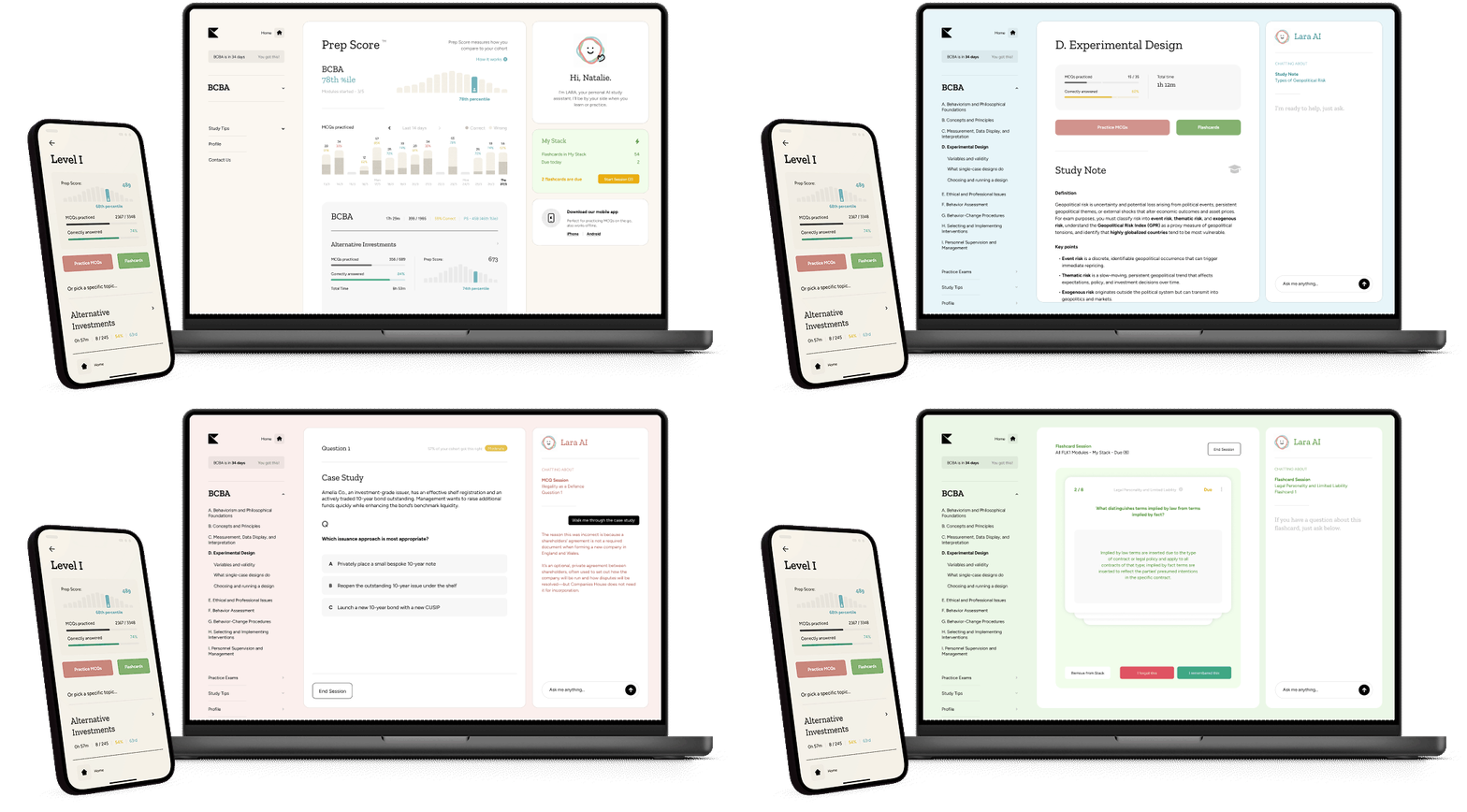
You can run cards on paper, but digital tools schedule the spacing for you — resurfacing cards you struggle with more often and easy ones less. Kinnu's flashcards are built on spaced repetition and mapped to the 6th Edition outline, and its AI tutor Lara can turn a concept you keep missing into fresh practice on the spot. Whatever tool you choose, the principle is the same: short, daily, retrieval-based, spaced.
The one-minute habit
End every study session with a 60-second brain dump: close everything and write down what you remember. It's free, it's fast, and it's one more retrieval rep that tells you what to card next. Now let's choose the tools to build all this on — The Best BCBA Prep Materials.
Start your 7-day free trial now
No credit card required
Get instant access
Start learning now
- Full access to all MCQs
- Full access to all Study Notes
- Full access to all Flashcards
- Full access to Mock Exams
- Lara AI assistant
- Prep Score & performance analysis
- Desktop & Mobile app