Introduction: What is the BCBA?
The Board Certified Behavior Analyst (BCBA) is the graduate-level credential in applied behavior analysis (ABA) — the science of understanding and changing behavior. Earning it is what lets you independently assess clients, design behavior-change programs, and supervise the technicians and assistant analysts who carry them out. For most people it's the gateway to leading ABA services in autism care, schools, healthcare, and organizations.
The credential is awarded by the Behavior Analyst Certification Board (BACB), a nonprofit that sets the eligibility standards, publishes the content the exam is built on, and administers the exam (through Pearson VUE). To get there you need three things: a qualifying graduate degree plus specific coursework, a stretch of supervised fieldwork, and a passing score on the BCBA exam.
This guide is about that last hurdle — and how to clear it on your first attempt.
Is the BCBA exam difficult?
In a word: increasingly. The BCBA exam has always been demanding, but the numbers have gotten harder, not easier.
The first-time pass rate fell to 51% in 2025 — essentially a coin flip — down from a high of 66% in 2020.
Retake pass rates are far lower, hovering around 23–25%. In other words, your first attempt is by some distance your best attempt, which is exactly why first-time preparation matters so much.
Year | First-time pass rate |
|---|---|
2020 | 66% |
2023 | 56% |
2024 | 54% |
2025 | 51% |
Source: BACB annual data reports.
Why is it so challenging?
A few forces stack up:
Breadth. The exam is built on the BACB's 6th Edition Test Content Outline, which spans nine domains and 104 tasks — from the philosophy of behaviorism, through measurement and experimental design, to assessment, intervention, ethics, and supervision. You are tested on the whole field, not a favorite corner of it.
Application, not recall. Questions are heavily scenario-based. It's not enough to define negative reinforcement; you have to spot it inside a messy clinical vignette where three of the four options look defensible.
Fieldwork variability. Commentators tie the pass-rate slide partly to uneven fieldwork quality — candidates who logged hours without deep, supervised practice struggle to generalize concepts under exam pressure.
None of this means the exam is unbeatable. It means preparation has to be deliberate: know the content outline cold, practice applying concepts to scenarios, and rehearse under timed conditions.
What this guide covers
We'll walk you through everything you need to ace the BCBA, in five parts:
The Credential — what the BCBA is, how you become eligible and apply, and the careers it opens.
The Exam — how it's structured, how scoring and the pass mark actually work, and the scheduling, fees, and Pearson VUE logistics.
How to Study — the science of learning, how to prioritize the content outline, how to start, how to build a study plan, and how to make material stick.
Prep Resources — the best materials, whether tutoring is worth it, and where to find your people.
Exam Day — pacing and timing tactics to bring it home.
BCBA eligibility requirements change on 1 January 2027. If you're early in the pipeline, read Eligibility, Fieldwork, and the BACB Application first — there's a hard deadline you'll want to know about.
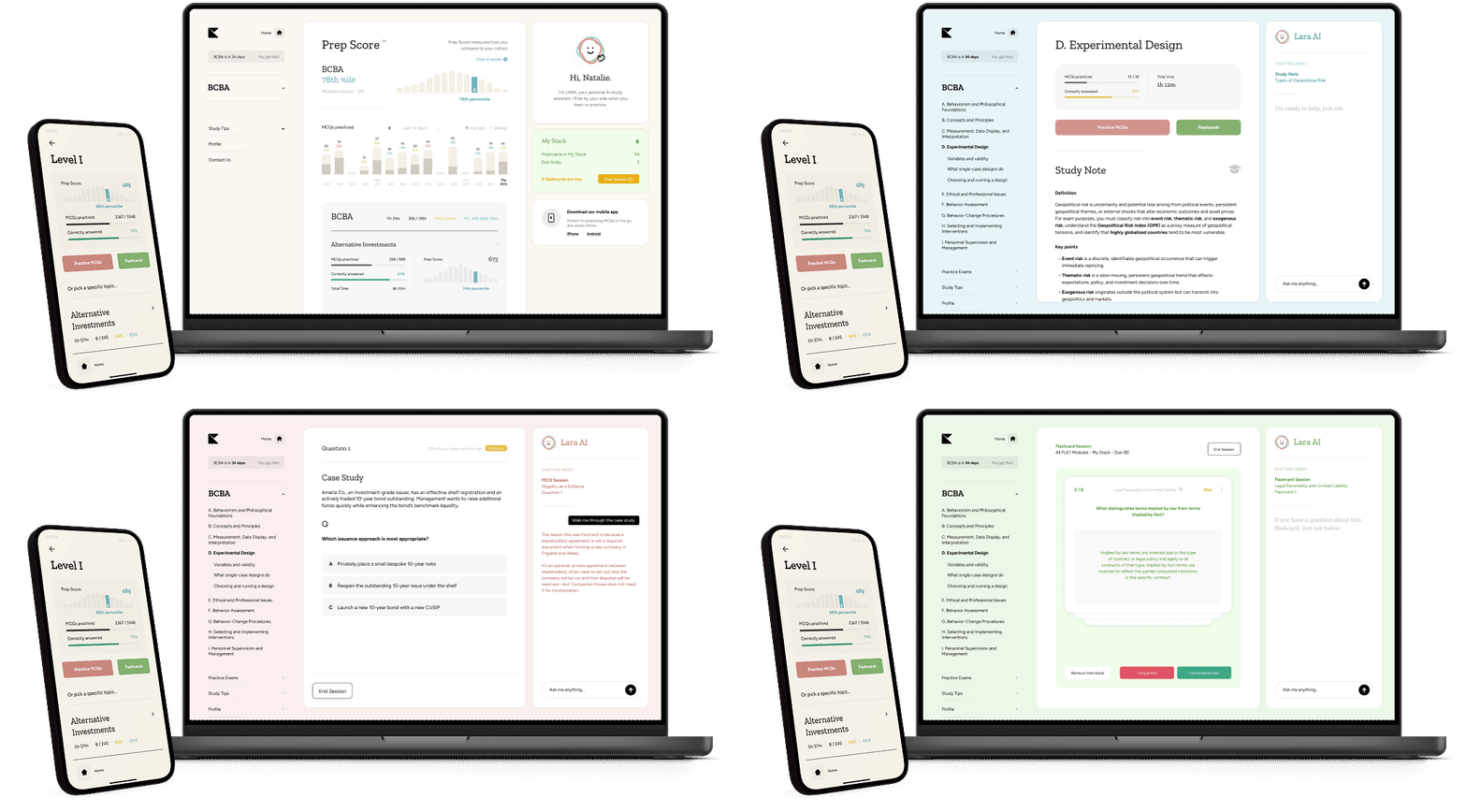
Kinnu's BCBA course is built directly around the 6th Edition outline, with study notes, scenario-style MCQs, flashcards, full-length mocks, and Lara, an AI tutor trained on the content — so you can spend your time practicing the way the exam actually tests you. More on that in The Best BCBA Prep Materials.
Start your 7-day free trial now
No credit card required
Get instant access
Start learning now
- Full access to all MCQs
- Full access to all Study Notes
- Full access to all Flashcards
- Full access to Mock Exams
- Lara AI assistant
- Prep Score & performance analysis
- Desktop & Mobile app